Data Protection in the Healthcare Sector: A Guide for Managers
Short Summary
Data protection in the healthcare sector is based on data protection legislation, patient record laws, and patient rights laws, and must ensure the confidentiality, integrity, and availability of patient records. Managers are responsible for internal controls, access control, risk assessment, and a data breach response plan.
- Health information is sensitive data and requires a specific legal basis for processing.
- The Data Protection Authority and the Director of Health oversee this, and the same incident may require notifications to multiple parties.
- Access to patient records should be based on minimum authorisations and multi-factor authentication.
- A data breach response plan must be in place before a breach occurs and be tested regularly.
- Backups must be separate from the main system and recovery must be tested regularly.
Table of Contents
- Legal basis for data protection in Icelandic healthcare
- Security of patient records: what needs to be protected and how
- Access control in healthcare systems: who can see what
- Risk assessment, cybersecurity, and data breach response plan
- Backup and recovery of health data
- Data sharing, patient consent, and their rights
- Frequently Asked Questions
In this article, we will cover what managers in the Icelandic healthcare sector need to know about data protection in healthcare. Health information is among the most sensitive data that companies and organisations process, and the requirements for its protection are strict. This article covers what needs to be protected, who is responsible, and how to build a secure environment for medical records and other data.
Last updated: 1 November 2026
Legal basis for data protection in Icelandic healthcare
Data protection in the healthcare sector rests on a legal foundation that managers must be aware of. Data protection legislation and regulations on the processing of health information set clear boundaries on what can be processed, how, and for what purpose. These regulations apply to both public institutions and private companies that process patient data.
This is not a single law but an interplay of several legal sources. The Data Protection Act (Act No. 90/2018) is general framework legislation on the processing of personal data and is based on the EU's General Data Protection Regulation 2016/679 (GDPR), which has been incorporated into Icelandic law. The Act on Medical Records and other acts on healthcare services set specific rules regarding what information must be recorded, who may access it, and how long it is stored. The Act on Patient Rights and regulations in the field of healthcare further add requirements for information provision and consent. Managers need to read these sources together, as the general data protection legislation only applies to the extent that specific legislation on healthcare services does not provide otherwise.
Oversight is also divided. The Data Protection Authority is an independent supervisory authority for data protection and oversees compliance with data protection laws, including in the healthcare sector. The Director of Health oversees healthcare services and medical records, and healthcare institutions are responsible for internal oversight in accordance with laws and regulations. This means that the same incident may require notification to more than one party, and managers should have clear procedures for such notifications.
Managers must familiarise themselves with the applicable laws and regulations at all times. The legal landscape changes, so it is good to follow announcements from the Data Protection Authority, the supervisory authority for data protection, which provides guidance and rulings.
Data protection and legal conditions for processing health information
Health information is considered sensitive personal data, and therefore a specific legal basis is required to process it. Processing is only permitted when it has a clear purpose and when legal conditions are met. Many companies underestimate this aspect and start collecting data before they have defined what they will use it for.
It is advisable to carefully record processing activities, specifying what data is processed, for what purpose, and how long it is stored. This facilitates both daily operations and responses if supervisory authorities request information.
Responsibilities of healthcare institutions and data protection officers
The responsibility rests with the management of the institution, not just the IT department. The data protection officer, where appointed, monitors compliance and advises on processing. Managers who ensure the officer has access, time, and support achieve much better results.
A common mistake is to view data protection as a one-off task. It is an ongoing process that requires regular review as systems, staff, or services change.
Security of patient records: what needs to be protected and how
The security of medical records involves three aspects: confidentiality, integrity, and availability, and data protection in the healthcare sector is based on ensuring these simultaneously. Computer services for health centres deals with specialised services for healthcare. Medical records must not fall into the wrong hands, they must not be altered without authorisation, and they must be accessible when needed. All of this must be ensured simultaneously.
Start by mapping where medical records are stored, whether in a local system, in the cloud, or both. Each system requires its own protection. Encryption in transit and at rest is a basic requirement, and backups must be as well protected as the original data.
Three main objectives apply to the protection of medical records:
| Factor | Objective | What it means |
|---|---|---|
| Confidentiality | Medical records do not fall into the wrong hands | Medical records must not fall into the wrong hands |
| Integrity | Data is not altered without authorisation | They must not be altered without authorisation |
| Availability | Data is accessible when needed | They must be accessible when needed |
Access control in healthcare systems: who can see what
Not all employees need access to all data. A nurse on duty needs to see information about their patients, but not about the entire institution. Define roles and limit access based on actual need; this is the principle of least privilege.
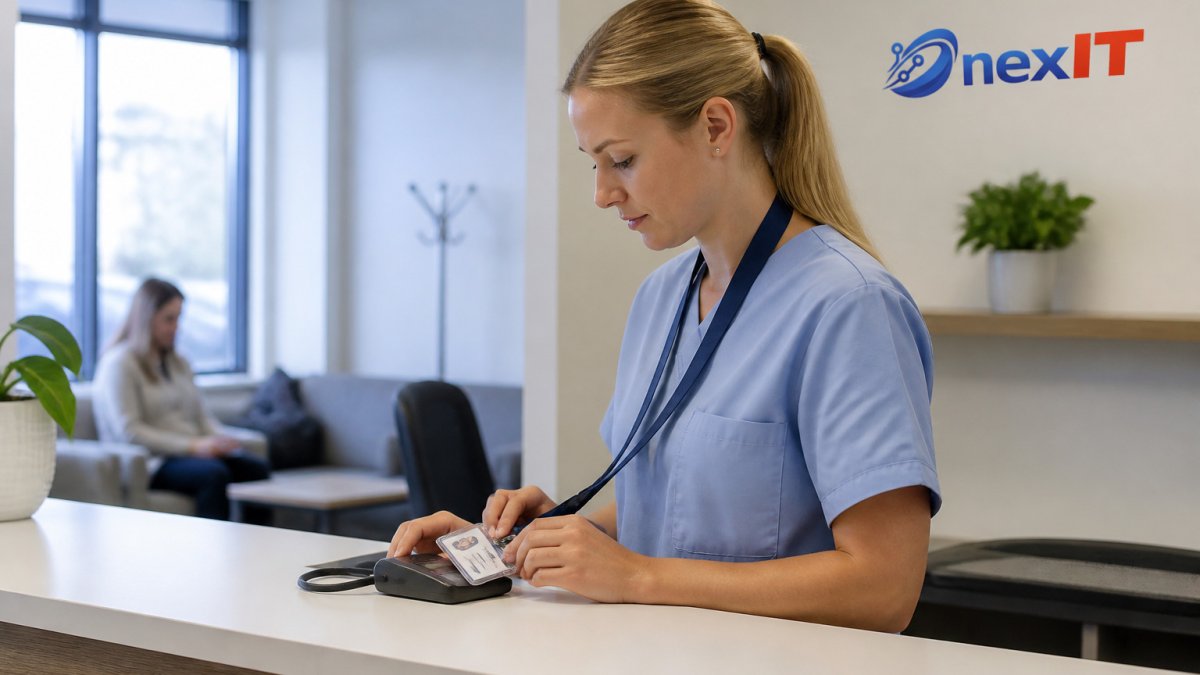
Multi-factor authentication significantly reduces the risk of unauthorised access, especially when staff are working outside the institution. See how multi-factor authentication is set up here to restrict access to medical records. Also log and regularly review access, as little else reveals misuse better than a review of access logs.
Risk assessment, cybersecurity, and data breach response plan
Risk assessment is the starting point for all security work. Analyse which data is most important, what threats it faces, and what the consequences of a breach would be. The results should determine where resources and time are spent.
In the healthcare sector, risk assessment commonly considers three factors: likelihood of an event, impact on patients, and impact on the institution's operations. Information system interoperability requirements describe how to demonstrate that these requirements are met. Data on mental health, infectious diseases, and genetic information can have particularly serious consequences if they fall into the wrong hands, and therefore their protection must be prioritised. The risk assessment should be reviewed regularly and whenever new systems, new suppliers, or new processing procedures are introduced.
Cybersecurity is not a single tool but a collection of measures that work together. Encryption in transit and at rest is a basic requirement. Multi-factor authentication for everyone who accesses patient records significantly reduces the risk of unauthorised access. Access control should be based on minimum privileges, so that each employee only sees what they need to perform their job. Logging of access and regular review of access logs is one of the most effective ways to detect misuse. Backups must be separated from the main system and tested regularly, because a backup that has never been restored may prove unusable when it is most needed.
A data breach response plan must be in place before a breach occurs. It must specify who reports to whom, within what timeframe, and what steps are taken to limit the damage. According to data protection legislation, the controller is obliged to notify the Data Protection Authority of a security breach that is likely to result in a risk to the rights and freedoms of individuals; further information is provided by the Data Protection Authority on its website. If the risk is high, the individuals concerned must also be informed. In the healthcare sector, additional notifications may be made to the Director of Public Health or other supervisory authorities, depending on the nature of the case.
Do not wait to assess risk until an incident occurs. A written response plan, tested with regular drills, is the prerequisite that enables the institution to react correctly in the first few hours.
Backup and recovery of health data
Backups are not a defence unless they can be restored. Test restoration regularly, because a backup that has never been tested may prove unusable when it is most needed. Keep backups separate from the main system and protect them with the same strength as the original data.
Secure data backup and restoration is an important part of security work, and it is most important that managers know how the restoration is carried out before problems arise.
Data sharing, patient consent, and their rights
Disclosure of health data to third parties requires a clear legal basis or patient consent. Patients have the right to information about how their data is used and the right to access their own data (Access to health records). Institutions that do not respond to these rights clearly risk both complaints and fines.
Frequently Asked Questions
How best to protect health information?
It is best to build defence in layers: limit access to those who need it for their work, encrypt data both in transit and at rest, keep a log of all access, and regularly review who has permissions. A risk assessment must be carried out for each system and updated when systems or staff change. Staff also need training, as human error is one of the most common causes of data breaches in healthcare.
Who is allowed to access a patient record?
Access to patient records is limited to healthcare professionals involved in the patient's treatment who need the information to provide it. Other staff may only access records if their job requires it, and the patient can request information about who has viewed their record. Access rights should be documented and reviewed regularly, especially when staff leave or change roles.
How to respond to a data breach in healthcare?
A response plan must be in place in advance and include clear division of responsibilities, contacts, and steps: identify the scope of the breach, block the access that was misused, assess what personal data was at risk, and notify the supervisory authority and affected individuals within the legal timeframes. The entire process must be documented to demonstrate the response later and learn from the incident.
How often should patient records and other important data be backed up?
The frequency of backups depends on how much data changes and how much loss a healthcare institution can tolerate. It is common to take daily backups of active data and weekly or monthly backups stored elsewhere. However, the most important thing is to test recovery regularly, as a backup that cannot be recovered is useless. Prices vary depending on scope and setup, and further pricing information is available on the nexIT website or by requesting a quote.
What should a healthcare institution's security plan include?
A security plan should describe what data the institution processes, who is responsible for it, how access is managed, what security measures are in place, how backups and recovery are performed, and what happens in the event of an incident. It should be reviewed annually and after major system changes, and staff training should be part of it.
Data protection in the healthcare sector is not a one-off task. If you want to know where your institution stands, a good place to start is a data protection audit. At nexIT, we review systems, access, and response plans, giving you a clear picture of the situation. Get in touch and receive an audit tailored to your operations.